Demystifying Fire-Resistant Glass Classifications
Demystifying Fire-Resistant Glass Classifications
The Core Principle: Integrity (E) vs. Insulation (I) in Fire Safety
The world of fire-resistant glass can seem complex, but it is built upon two fundamental performance concepts: Integrity and Insulation. Understanding this distinction is crucial for selecting the right product. The E Classification stands for Integrity. A glass with an E rating (e.g., E 30, E 60) is tested to prevent the passage of flames, hot gases, and smoke for the stated duration. It acts as a physical barrier to fire spread. However, an E-rated glass allows significant radiant heat to transfer through it. While it stops flames, the heat on the unexposed side can become intense enough to ignite combustible materials or cause severe burns, limiting its safe proximity. The more advanced EI Classification combines Integrity (E) with Insulation (I). Insulation measures the glass's ability to limit heat transfer. An EI-rated glass (like EI 60 or EI 120) not only prevents flame passage but also restricts the temperature rise on the protected side, typically keeping it below 140°C average and 180°C at any single point. This insulation is critical for protecting escape routes and adjacent compartments, as it prevents secondary ignition and allows people to pass near the glass safely during an evacuation.
Decoding the Classifications: EI, EW, E, and Their Real-World Meaning
Building on the core principles, international standards (like EN, BS) define specific classes. The most common classifications you will encounter are EI, EW, and E. As explained, EI is the gold standard for full compartmentation, providing both flame/ smoke block and heat insulation. It is essential for walls and doors protecting escape corridors, stairwells, and separating different occupancy areas. The EW Classification is a middle ground. The "W" stands for Radiation. EW-rated glass provides Integrity (E) and also reduces the amount of radiant heat passing through, but it does not fully meet the strict Insulation (I) criteria. It limits heat radiation to a level that can prevent ignition of certain materials at a set distance, offering more protection than E glass but less than EI. Finally, the E Classification provides integrity only. It is suitable for locations where the primary concern is blocking flame and smoke spread, and where people or combustible materials will not be in close proximity to the glass during a fire, such as in some high-level glazed screens or certain industrial settings. The number following the letters (30, 60, 90, 120) indicates the duration in minutes the assembly is certified to maintain that level of performance under standard test conditions.
Choosing the Correct Classification: Alignment with Building Codes and Applications
Selecting the appropriate classification is not a matter of preference but of code compliance and risk assessment. Local building regulations will explicitly mandate the required classification (EI, EW, or E) and duration for specific elements like corridor walls, stair enclosures, or room partitions. An EI-rated glass is typically required for any element forming part of a protected escape route or separating different fire compartments, as it safeguards the escape path from both flames and intense heat. For an internal office partition that does not protect an escape route but needs to resist fire spread within a tenancy, an E-rated or EW-rated partition might be sufficient, depending on the code. The choice also impacts the product's appearance and thickness; EI glass often uses multiple laminated layers with intumescent interlayers, which can be thicker, while some high-performance E-rated glasses can be quite slim. Consulting with experts like PYRONANO during the specification phase is vital. They can interpret the codes for your project's jurisdiction and recommend the precise, certified glazing system that meets both the legal safety requirements and the project's aesthetic and functional goals, ensuring you are neither under-specified (creating risk) nor over-specified (incurring unnecessary cost).
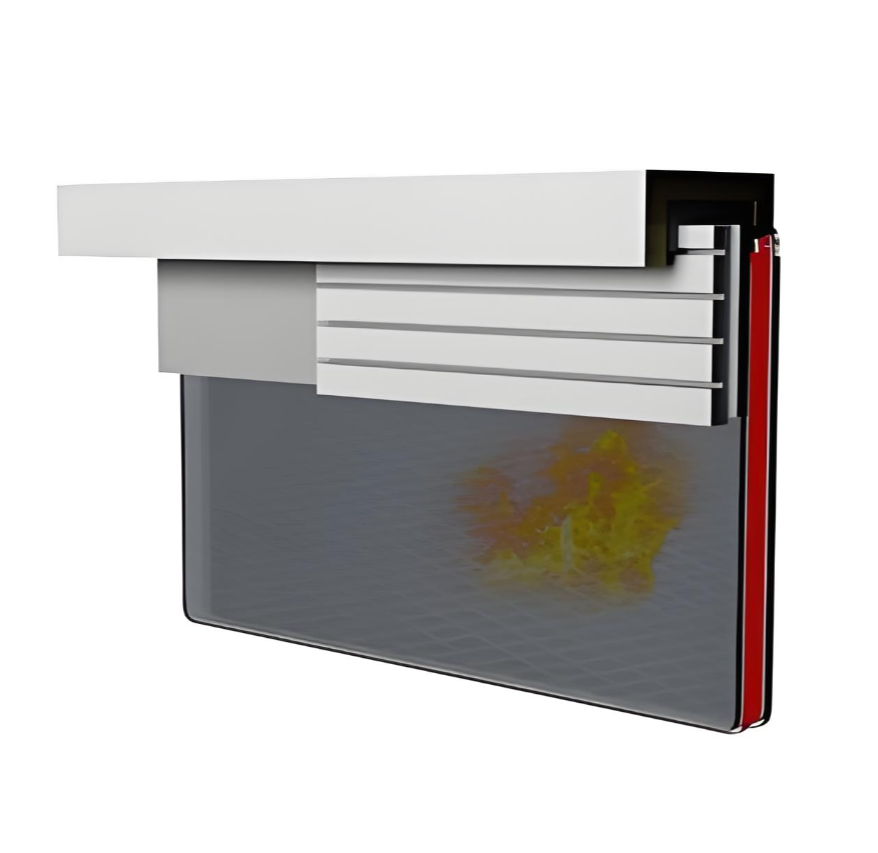
In essence, understanding fire-resistant glass classifications is about decoding a precise language of safety performance. The EI, EW, and E ratings are not marketing terms but certified, test-verified guarantees of how a glass assembly will behave in a fire. By grasping the critical difference between Integrity (blocking flames) and Insulation (blocking heat), specifiers can make informed choices that align with stringent building codes. Partnering with a knowledgeable manufacturer like PYRONANO, which produces the full spectrum of EI, EW, and E-rated products, ensures that the selected glass is not only aesthetically pleasing but forms a code-compliant, predictable, and life-saving part of the building's passive fire protection strategy. Demystifying these classifications empowers you to build with both confidence and clarity.