EI30 vs EI60 vs EI90 vs EI120 Fire Rated Glass: Key Differences
EI30 vs EI60 vs EI90 vs EI120 Fire Rated Glass: Key Differences
When selecting fire rated glass for commercial buildings, understanding the difference between EI30, EI60, EI90 and EI120 is critical. These ratings directly affect fire safety performance, project compliance and overall building protection.
Get QuoteWhat Does EI Mean In Fire Rated Glass
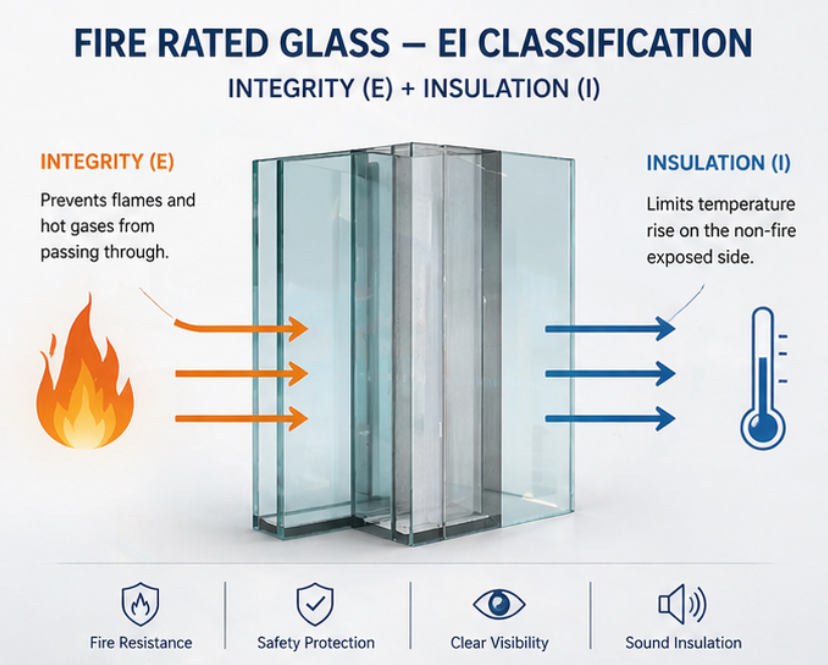
EI is a fire resistance classification used in European standards. It represents two key performance indicators: Integrity (E) and Insulation (I).
Integrity means the glass can prevent flames and smoke from passing through, while insulation ensures the temperature on the non-fire side stays below a safe level. This is essential for protecting evacuation routes and adjacent areas in commercial buildings.
EI30 vs EI60 vs EI90 vs EI120: Core Differences
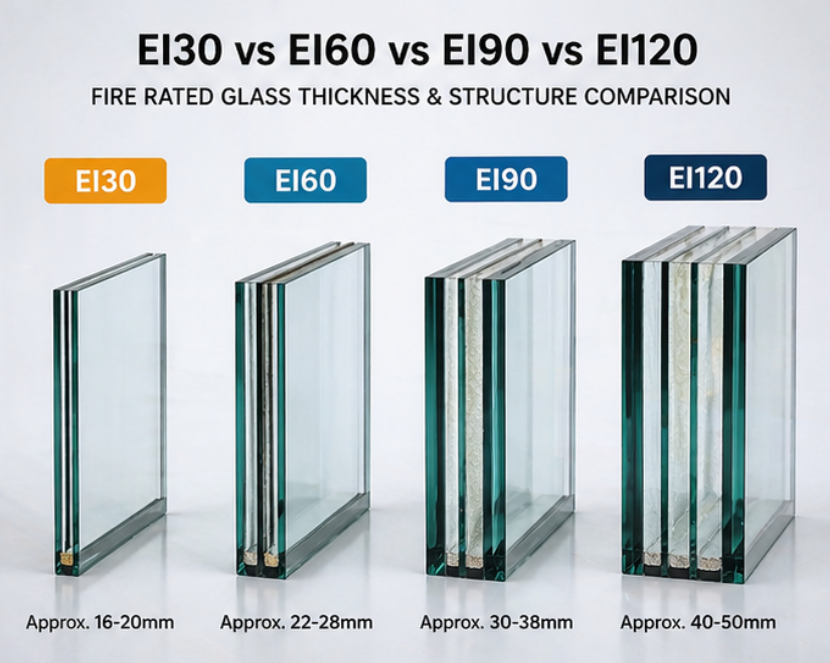
EI30: Provides 30 minutes of fire resistance. Suitable for low-risk areas such as small offices or internal partitions where evacuation is fast.
EI60: Provides 60 minutes of protection. Commonly used in corridors, office partitions and commercial buildings where moderate fire protection is required.
EI90: Provides 90 minutes of fire resistance. Used in larger buildings, shopping malls, hotels and areas requiring extended evacuation time.
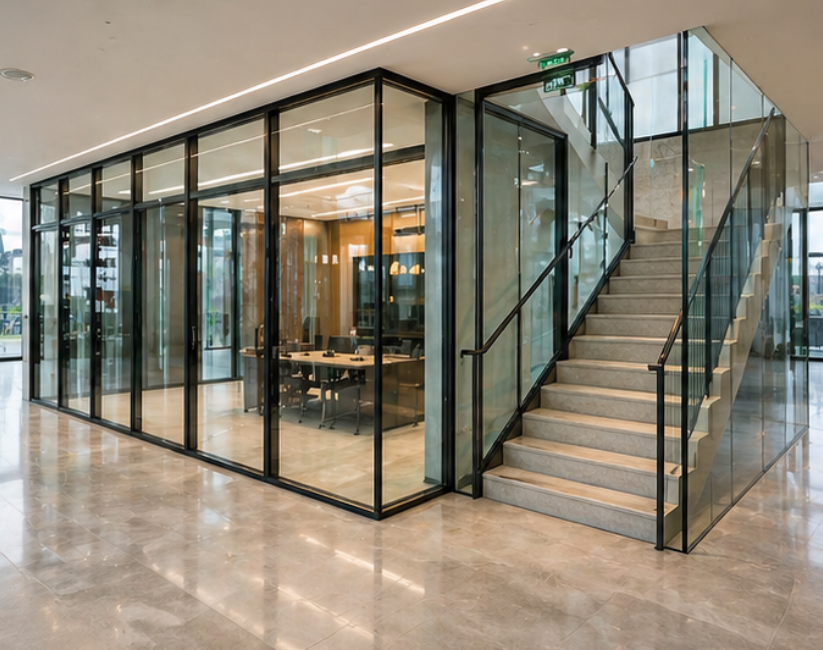
EI120: Provides 120 minutes of fire protection. Typically used in high-risk areas such as staircases, fire escape routes, industrial buildings and critical infrastructure.
The higher the rating, the longer the glass can maintain both integrity and insulation performance during fire exposure.
How To Choose The Right Fire Rating For Your Project
Selecting the correct fire rating depends on building type, local fire regulations and application area. Buyers should not simply choose the highest rating, but instead match the rating to project requirements.
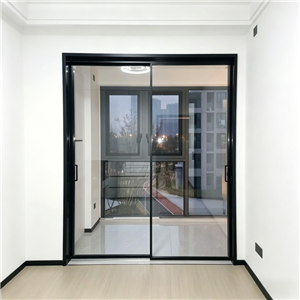
Office buildings: EI30 or EI60 for partitions
Hotels and shopping malls: EI60 to EI90
Hospitals and public buildings: EI60 to EI120
Staircases and escape routes: EI90 or EI120
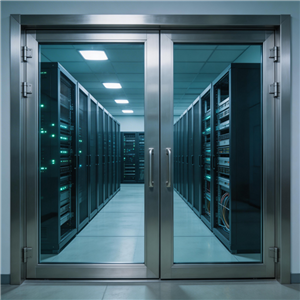
Industrial or high-risk zones: EI120 recommended
Always confirm requirements with architects, fire consultants and local codes before final selection.
Why Higher Fire Ratings Require Different Glass Structures
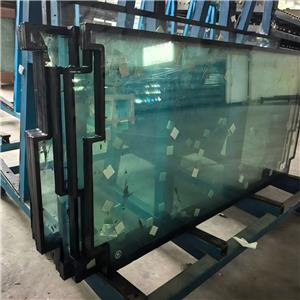
As fire rating increases, the internal structure of the glass becomes more complex. EI-rated glass typically uses multi-layer laminated structures with fire-resistant interlayers that expand under heat to block heat transfer.
Higher ratings require thicker glass, stronger edge sealing and more precise manufacturing processes. This is why EI120 glass is significantly heavier and more expensive than EI30 glass.
Conclusion
EI30, EI60, EI90 and EI120 fire rated glass differ mainly in fire resistance time, structure and application scenarios. Choosing the right rating is essential for balancing safety, compliance and project cost.
If you are working on a commercial building project, Pyronano can help you select the most suitable fire rated glass solution based on your drawings and requirements.
Need Help Selecting Fire Rated Glass?
Send your project details and fire rating requirements. We will recommend the right EI-rated glass for your project.
Contact Us Get Quote