How Curved Fire-Resistant Glass Maintains Structural Stability
How Curved Fire-Resistant Glass Maintains Structural Stability
Engineered Lamination and Intumescent Interlayer Integrity
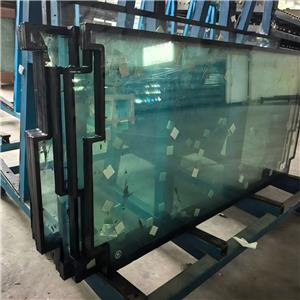
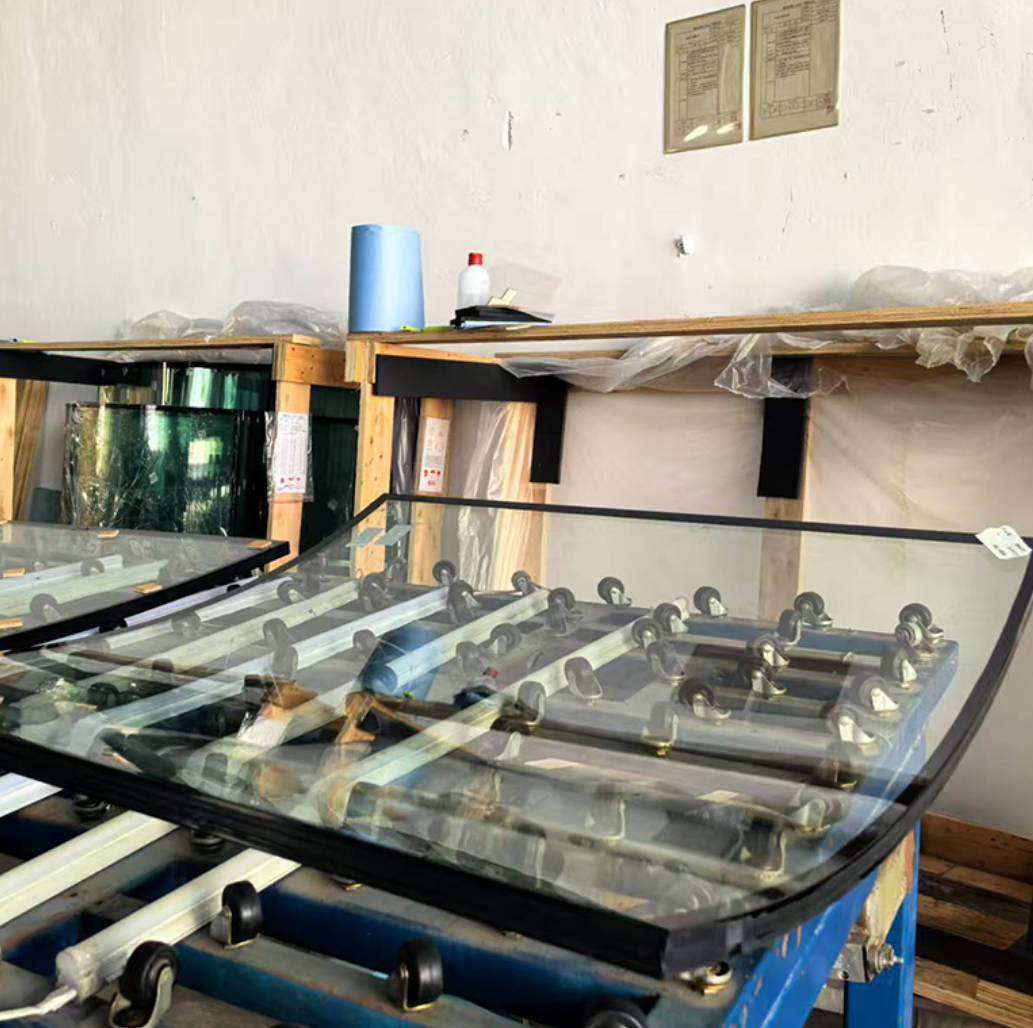
Curved fire-resistant glass maintains structural stability primarily through its multi-layered laminated composition, featuring a transparent intumescent interlayer. When exposed to extreme heat, this interlayer expands uniformly, creating a dense, opaque insulating barrier that absorbs thermal stress and prevents heat transfer. Unlike flat panels, curved glass must accommodate geometric stress distribution, which is achieved by precisely bonding the interlayer under controlled temperature and pressure during the lamination process. This ensures the glass curvature does not compromise the interlayer’s activation speed or uniformity, thereby preserving the glazing’s integrity and insulation performance (EI classification) under fire conditions. The interlayer’s formulation, often enhanced with nano-silica particles, further resists delamination and cracking—key factors in maintaining load-bearing capacity during prolonged exposure.
Thermally-Tempered Curvature and Frame Synergy
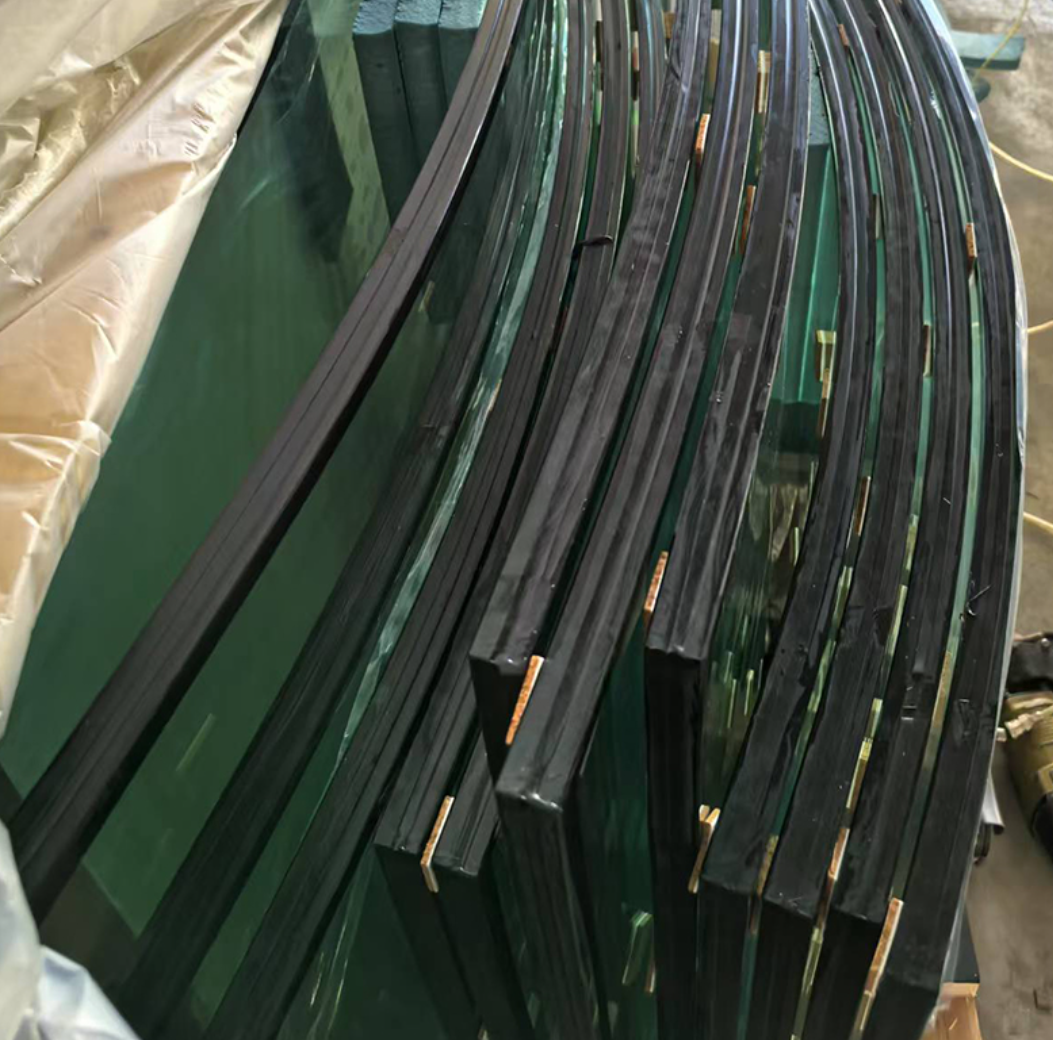
The curvature of fire-resistant glass is achieved through a specialized thermal tempering process that pre-compresses the glass surface, enhancing its mechanical strength and thermal shock resistance. This tempering allows the curved pane to withstand not only fire but also structural loads and wind pressure in applications such as atriums or curved facades. Crucially, stability relies on synergy with fire-rated framing systems (e.g., steel or aluminum alloy frames), which are engineered to match the glass’s radius and expansion coefficients. These frames provide continuous support, distributing stress away from the glass edges, while intumescent seals within the frame gaps expand during fire, preventing flame penetration and maintaining compartmentation. Together, the tempered curvature and compatible framing ensure the glass system remains intact without buckling or splintering.
Advanced Testing and Geometric Stress Modeling
Structural stability in curved fire-resistant glass is validated through rigorous testing (e.g., BS EN 1634-1) and finite element analysis (FEA) simulations. FEA models predict stress points along the curved surface, guiding optimal thickness, curvature radius, and interlayer composition. PyroNano’s glass undergoes full-scale furnace tests where curved units are exposed to temperatures exceeding 1000°C, verifying that the glass maintains integrity without blow-out or collapse. Additionally, the glass is engineered to accommodate thermal expansion of surrounding structures, preventing stress concentration at mounting points. This combination of digital modeling and physical testing ensures that even under asymmetric fire exposure, the curved glass retains stability, fulfilling both EW (radiation control) and EI (insulation) performance criteria.
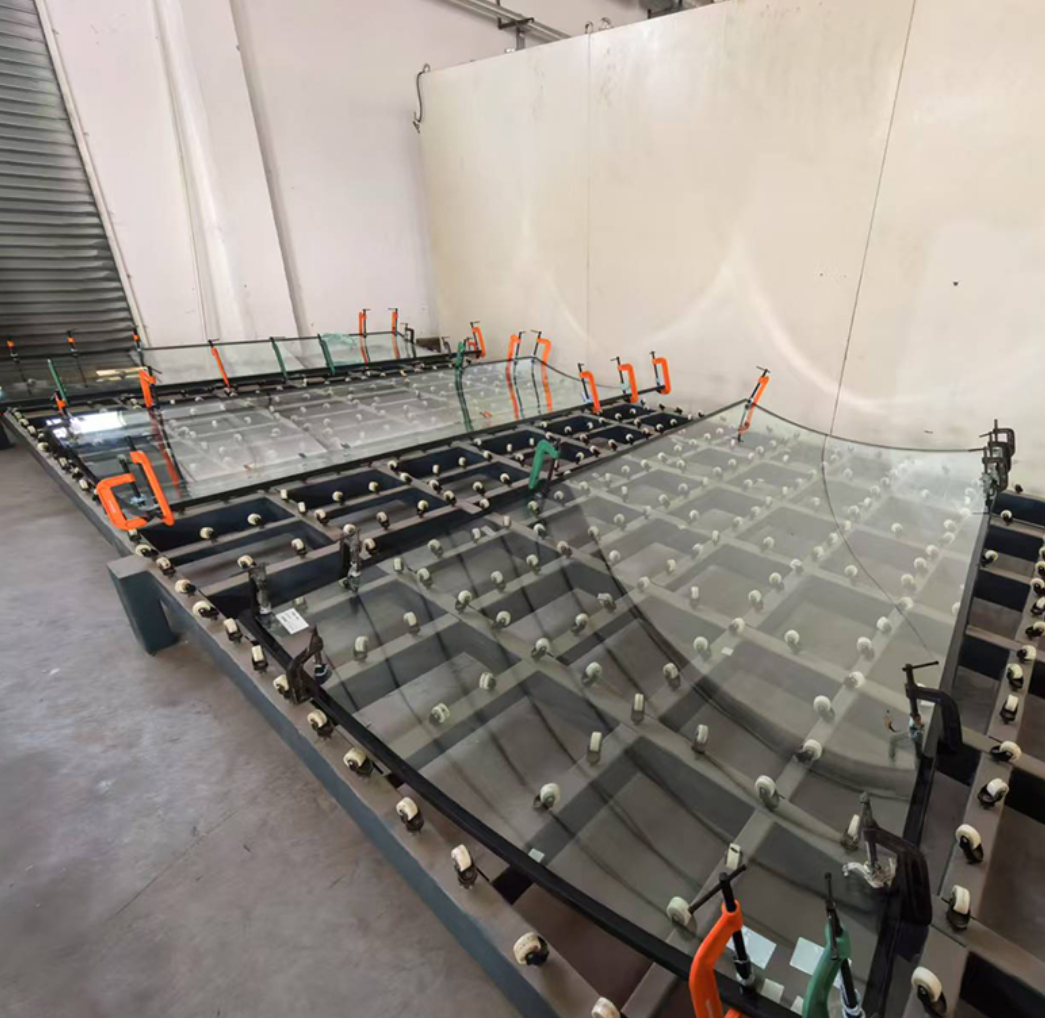
Curved fire-resistant glass achieves structural stability by integrating a precisely engineered intumescent interlayer, thermally-tempered curvature, and fire-rated framing systems, all validated through advanced testing. This synergy allows it to combine aesthetic flexibility with uncompromising fire safety, making it ideal for modern architectural designs demanding both curvature and critical protection.