What Should Buyers Consider When Planning Fire Rated Glass For Multi-Zone Buildings?
Multi-Zone Buildings Require More Strategic Planning
In multi-zone buildings, fire rated glass planning becomes more complex because different zones often serve different purposes and therefore require different technical priorities. A building may contain office partitions, public corridors, entrance areas, meeting rooms, and transitional spaces, all within one project. For buyers, this means the planning process must go beyond choosing one product and applying it everywhere.
The first step is to understand how the building is divided functionally and how fire glass is expected to support both fire separation and architectural continuity. Some zones may prioritize openness and visual integration, while others may demand stronger circulation safety, more robust system support, or stricter compliance review. If these differences are ignored, the selected solution may be inconsistent with actual project needs.
A strong supplier helps buyers begin by mapping the building into real-use zones rather than product categories. This gives a clearer view of which areas may share one system and which may require different technical approaches. It also reduces the chance of overgeneralizing the project.
Buyers Should Evaluate Where Consistency Matters and Where Differentiation Is Needed
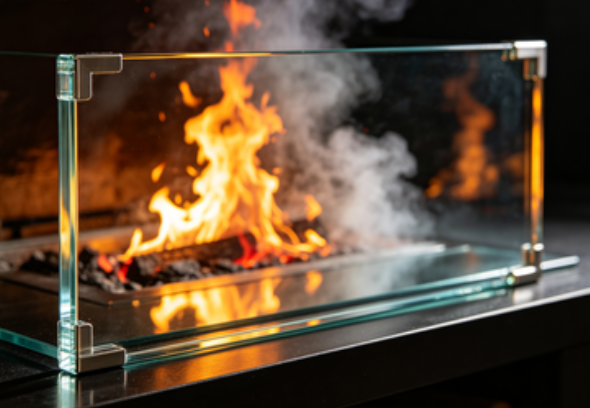
In multi-zone projects, one of the most important planning decisions is determining where consistency should be preserved and where different fire glass systems may be more appropriate. Visual consistency can be valuable for architectural coherence, but technical differentiation may still be necessary because different zones often have different fire, traffic, and installation conditions.
For example, a lobby-facing partition system may emphasize transparency and design refinement, while a corridor-adjacent area may require a more robust solution because of daily movement and regulatory sensitivity. In some cases, buyers may aim to create a visually unified space while still using different certified systems in different locations. That balance requires careful supplier guidance.
Professional suppliers help buyers make these decisions by reviewing system compatibility, approved use conditions, size limits, and how one area relates to the next. Instead of forcing one product into every zone, they help develop a coordinated strategy that respects both design continuity and technical reality.
Strong Planning Improves Approval, Delivery, and Installation Efficiency
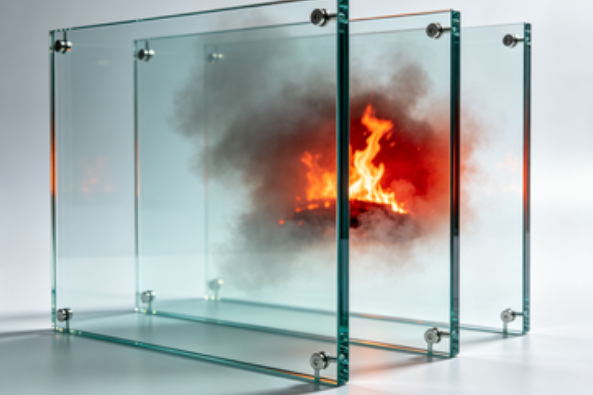
Multi-zone planning has a direct impact on project execution. If the fire glass strategy is not clearly organized from the beginning, buyers may later face approval confusion, mislabeled deliveries, installation errors, or unnecessary redesign. In contrast, a well-planned multi-zone approach improves the entire project workflow.
This includes confirming which systems apply to which areas, preparing documentation accordingly, organizing batch delivery by zone, and labeling panels clearly for installation teams. It also helps suppliers coordinate production and packaging in a way that matches the building sequence rather than treating the order as one undifferentiated delivery.
For international buyers, this type of planning reduces risk and improves predictability. It helps create a smoother connection between design decisions, supply logistics, and on-site execution. That makes the project easier to manage from procurement through final installation.

When planning fire rated glass for multi-zone buildings, buyers should consider more than product specification. They should look at functional zoning, system coordination, consistency versus differentiation, and execution strategy. For international projects, stronger multi-zone planning leads to lower risk, clearer approvals, and more reliable installation outcomes.