The Importance of Fire-Rated Gaskets for Fire-Rated Glass
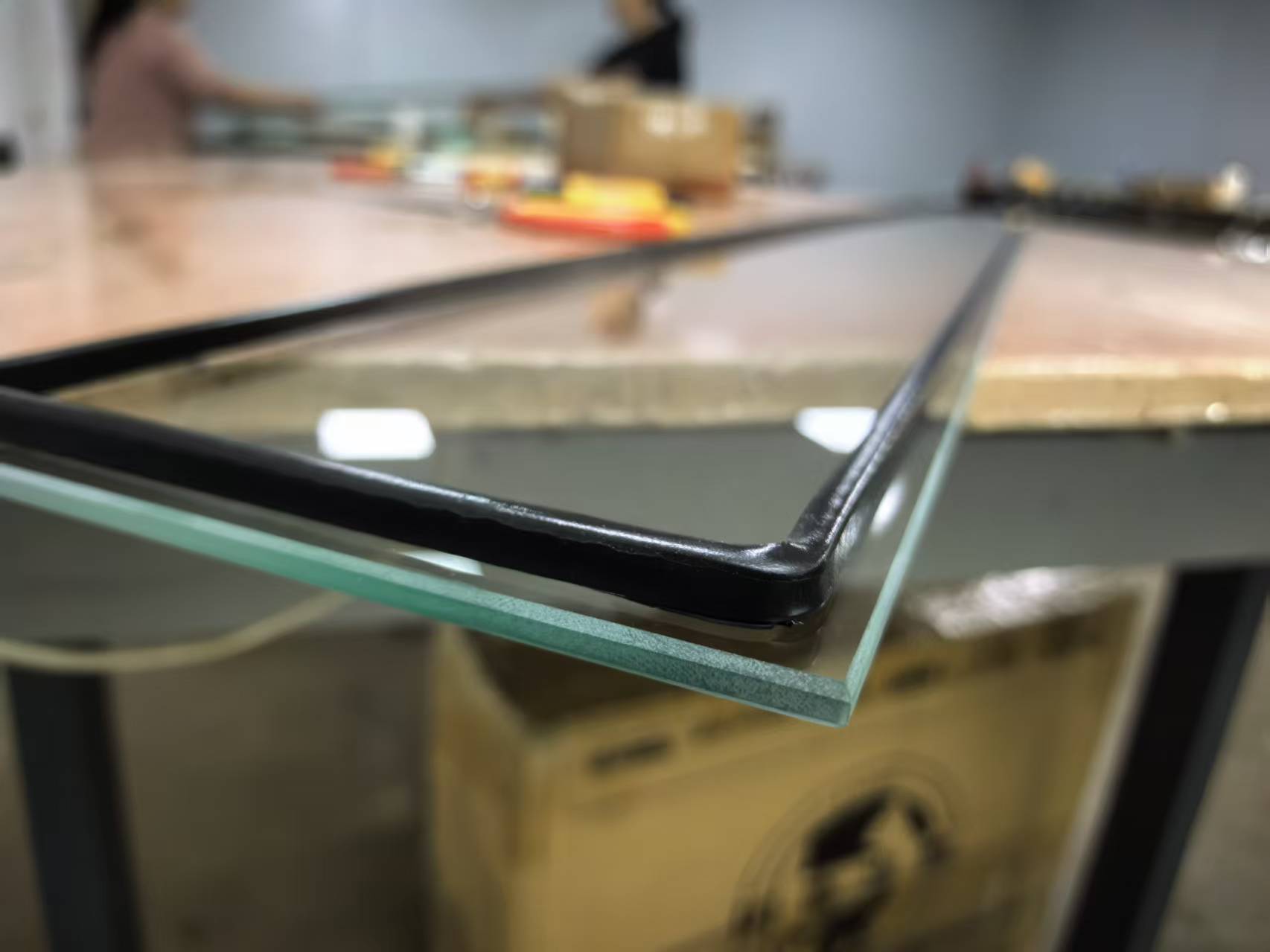
In modern building safety, fire-rated glass stands as a critical line of defense, designed to compartmentalize flames and smoke, protect escape routes, and provide crucial time for evacuation and emergency response. However, the performance of this specialized glass is entirely dependent on a seemingly minor yet utterly indispensable component: the fire-rated gasket. As illustrated in the accompanying image, which shows a close-up of a fire-rated glass pane with its distinct black sealing gasket in a workshop setting, this element is far more than a simple trim. It is the critical interface that ensures the entire assembly functions as a complete, tested, and certified fire-resistive barrier.
Primarily, fire-rated gaskets serve as an intelligent sealant. Their fundamental role is to create a continuous, resilient seal between the glass and its frame, and at the joints between glass lites. During a fire, this seal is the first defense against the deadly migration of smoke and toxic gases. Smoke inhalation is the leading cause of fire-related fatalities, and unchecked smoke can quickly render escape routes impassable. The gasket expands when exposed to heat, actively filling gaps to form an airtight and smoke-tight seal. This containment is vital for protecting occupants in adjacent spaces and for maintaining tenable conditions in stairwells and corridors, directly supporting life safety.
Secondly, these gaskets are essential for maintaining the structural and thermal integrity of the glazing assembly under extreme conditions. Fire-rated glass is engineered to withstand radiant heat and direct flame impingement for a specified duration (e.g., 20, 60, or 90 minutes). Without a properly rated gasket, heat would rapidly transfer through the perimeter gaps, creating a thermal bridge. This localized overheating can cause the glass to crack prematurely or compromise the integrity of the surrounding frame, leading to a catastrophic failure of the entire barrier. The gasket acts as an insulating buffer, mitigating heat transfer and helping to ensure that both the glass and the frame perform for their full tested duration, allowing the assembly to achieve its assigned fire-resistance rating.
Furthermore, beyond their paramount safety functions, modern fire-rated gaskets contribute to architectural aesthetics and versatility. Available in various colors, profiles, and materials, they allow designers to integrate essential fire protection seamlessly into the building’s design language. The gasket can be a subtle, almost invisible detail or a defined visual feature, ensuring that safety does not come at the expense of aesthetics. This enables fire-rated glazing to be used in visually sensitive areas like atriums, curtain walls, and interior lobbies without appearing utilitarian.
In conclusion, the fire-rated gasket is the silent guardian of the fire-rated glass system. It is not an optional accessory but a fundamental, code-required component that activates the glass’s protective capabilities. By reliably sealing against smoke, supporting structural integrity under heat, and offering design flexibility, the fire-rated gasket transforms a pane of specially engineered glass into a certified, life-saving fire barrier. Its proper selection and installation are, therefore, as critical as the specification of the fire-rated glass itself in any comprehensive fire-safety strategy.