One-Hour American-Standard Fire Test for a Glass Curtain Wall System
PyroNano has completed a one-hour American-standard fire test programme for a fire-resistant glass curtain wall assembly. The full-size specimen was installed at a fire-test furnace, instrumented on the unexposed face, exposed for approximately one hour, and then subjected to a post-fire hose-stream stage. The test record—not appearance alone—determines the result and the permitted scope of use.
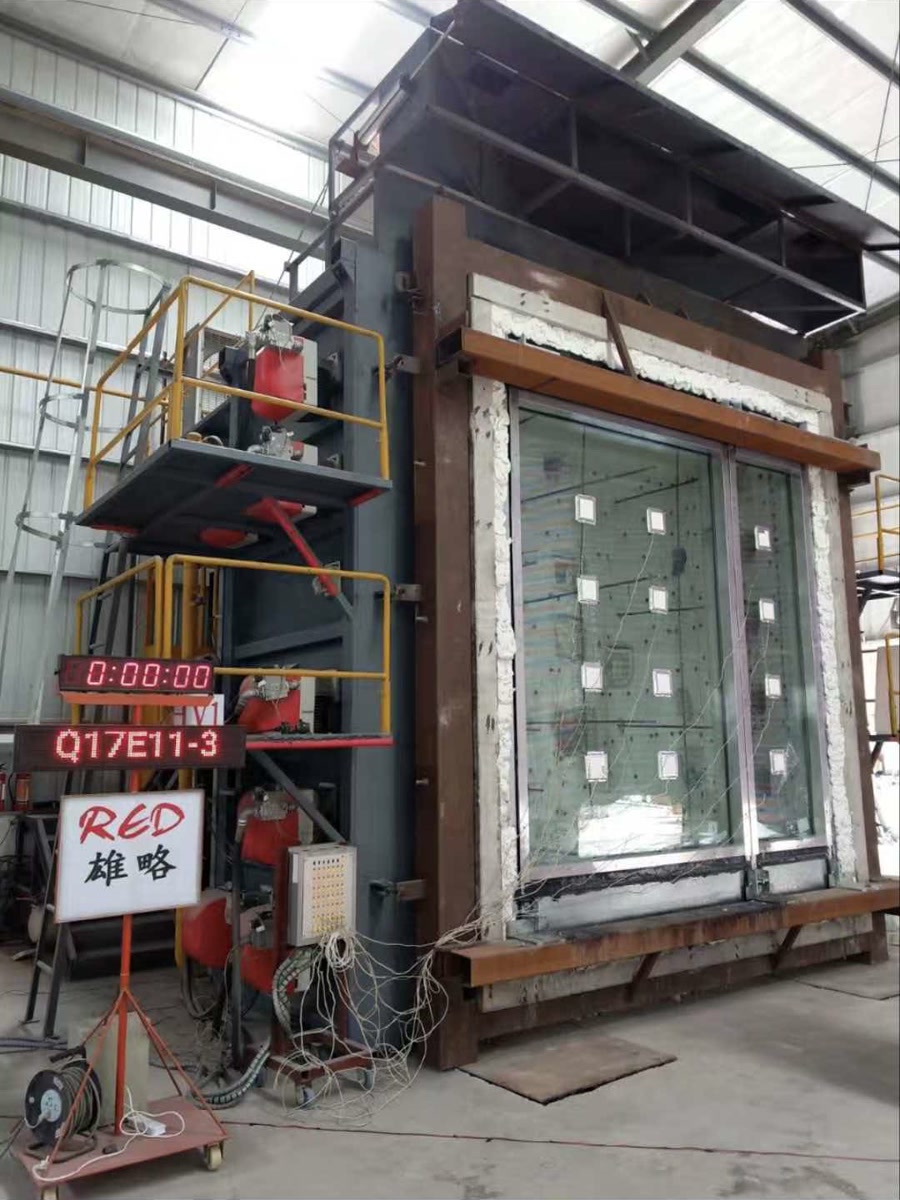
Why the Complete Curtain Wall Assembly Was Tested
A fire-rated glass curtain wall is a system, not a pane of glass used in isolation. Its performance depends on the interaction between the fire-resistant glass, mullions and transoms, perimeter framing, seals, joints, anchors, setting details, and the surrounding construction. Heat can cause every one of these components to expand, deflect, soften, or lose strength at a different rate.
For that reason, project teams should evaluate evidence for the complete tested construction. A glass product with suitable fire performance cannot automatically give an untested curtain wall the same rating. The installed configuration must remain within the dimensions, materials, fixing details, and field of application permitted by the relevant test report or listing.
Instrumented Test Setup
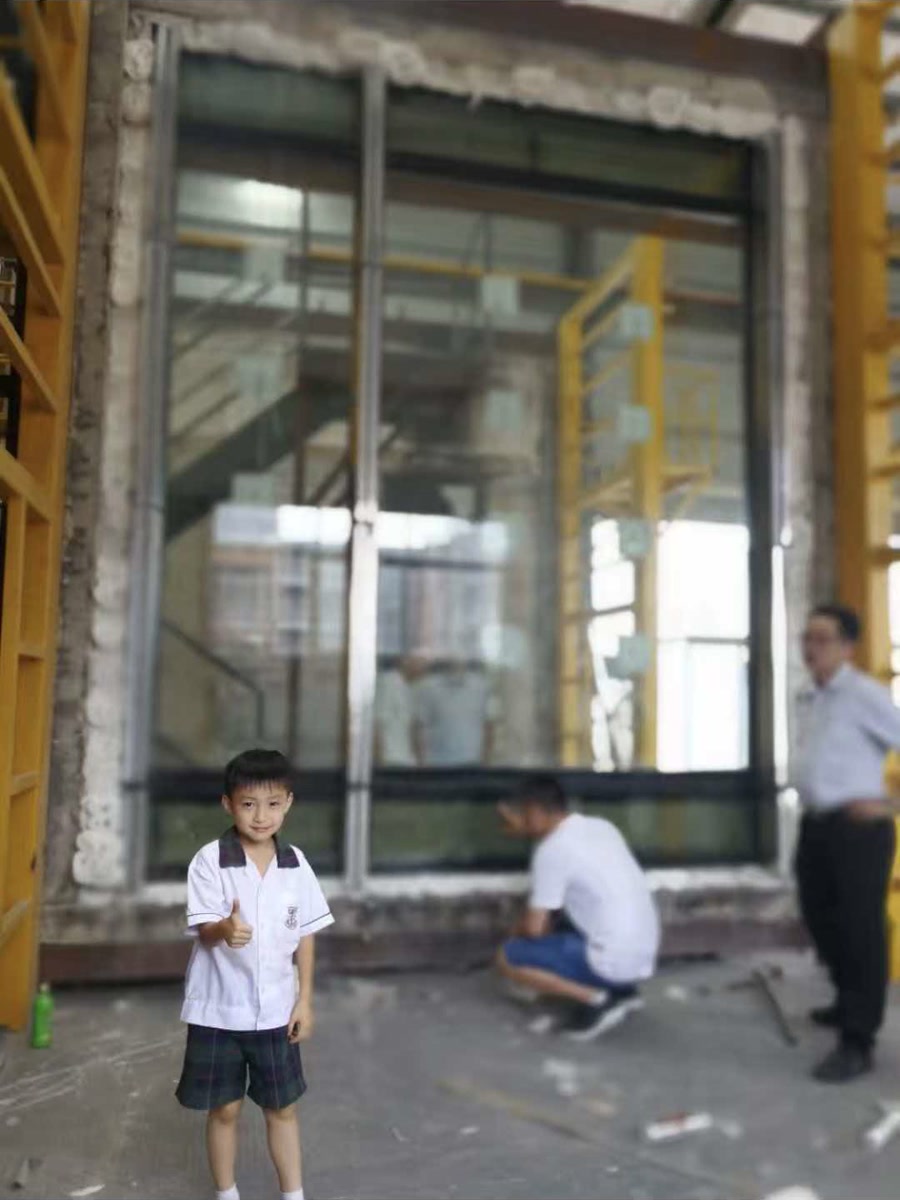
The specimen was mounted in the furnace opening with the glazing grid, framing members, perimeter interfaces, and supporting construction assembled for the test. Multiple sensors were placed across the unexposed face to record temperature data at designated locations during the fire exposure. This arrangement allows the laboratory to monitor the assembly throughout the test rather than judging performance from a single observation point.
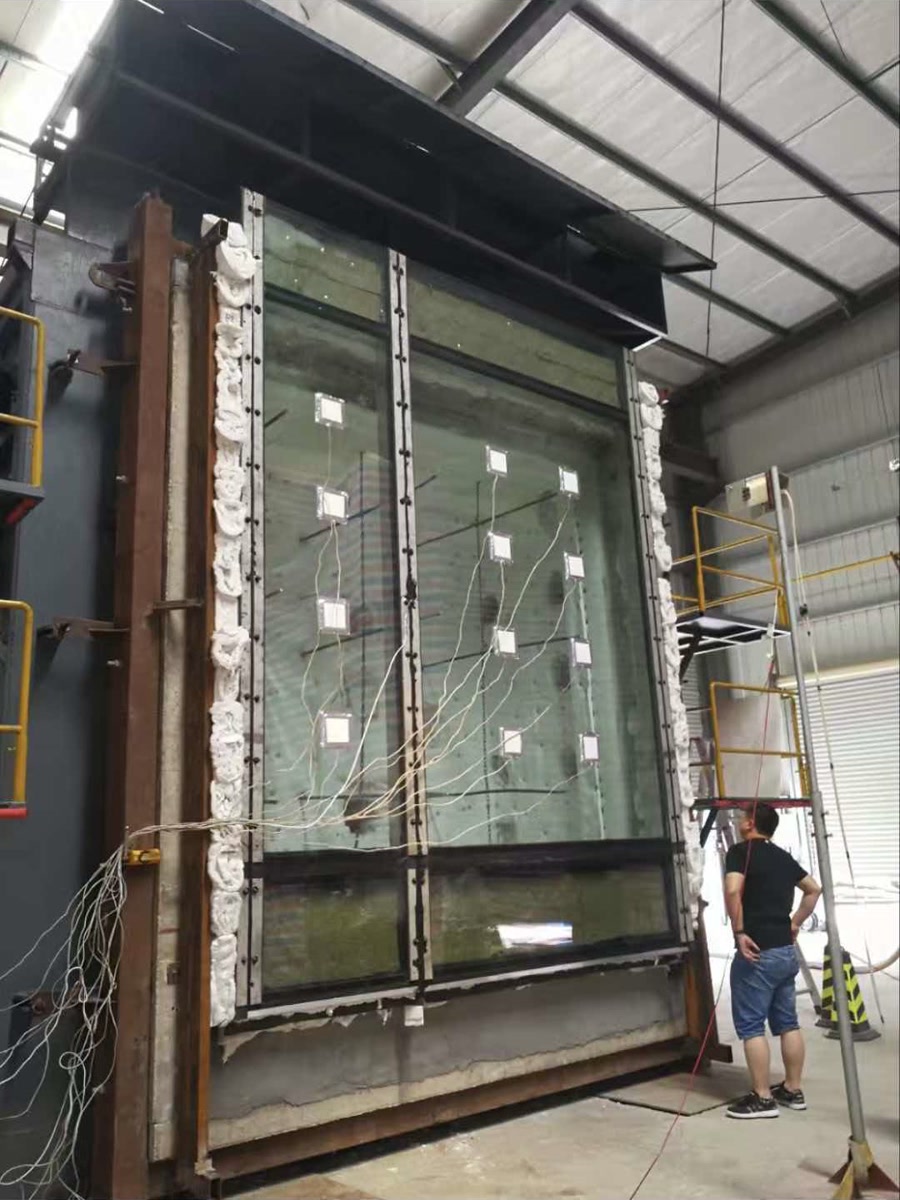
Before testing, the specimen configuration and instrumentation must be documented. During the test, the laboratory follows the specified heating programme and records the required measurements and observations. The exact temperature curve, furnace pressure, sensor arrangement, acceptance criteria, and reporting format depend on the applicable standard and the approved test plan.
One-Hour Fire Exposure
The photographed timer reached approximately one hour while the assembly remained under observation. Discoloration, steam, smoke, surface deposits, and deformation can be visible during or after severe fire exposure, but photographs do not replace measured data. The official report is the source for the achieved classification, duration, specimen description, and any limitations.
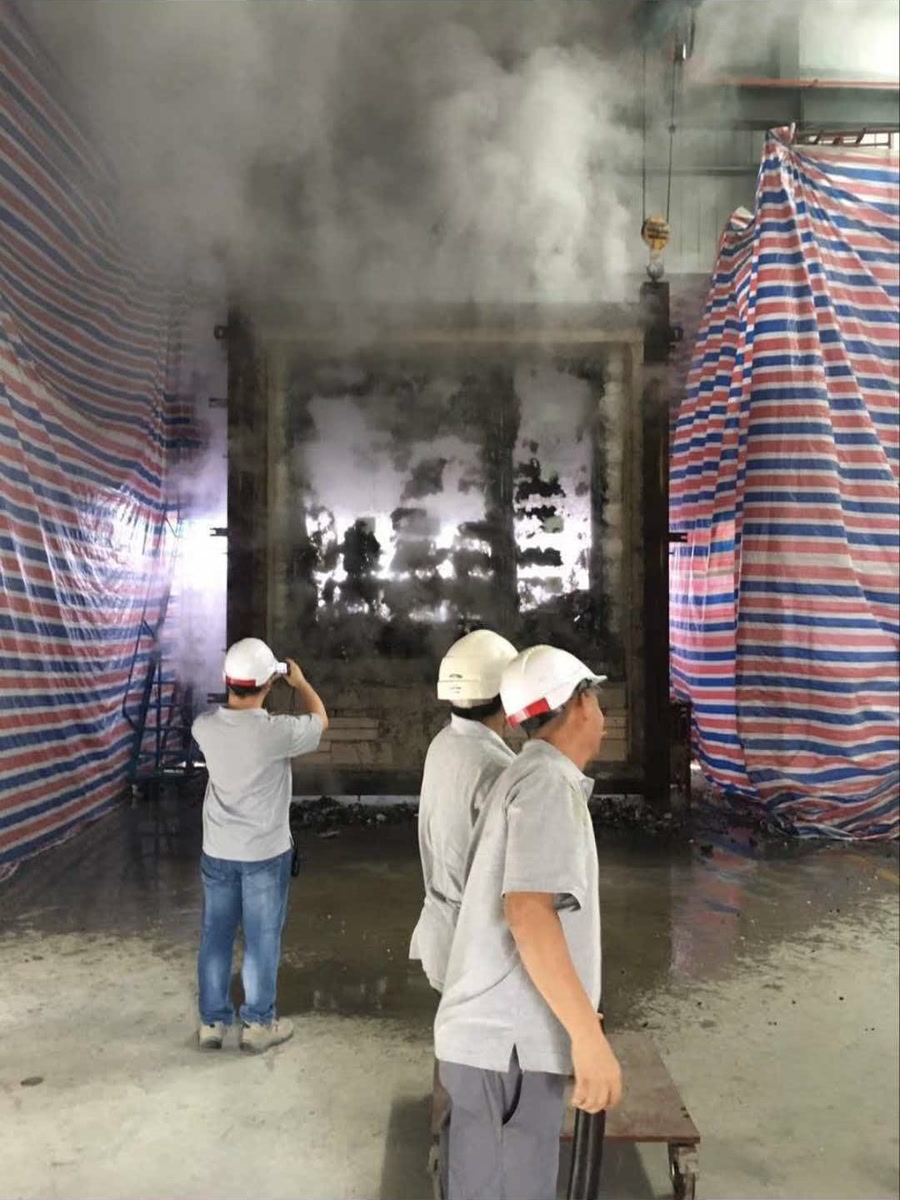
A one-hour fire test is demanding because the system must manage sustained thermal loading while its components move and react together. The glass edges, framing joints, perimeter seals, and anchors are particularly important: loss of compatibility at any interface can affect the behaviour of the complete assembly.
Post-Fire Hose-Stream Stage
After the fire-exposure period, the test programme included a hose-stream stage. Applying water to a hot assembly creates rapid cooling as well as a mechanical impact load. This stage examines whether the fire-exposed construction can withstand the specified water stream under the applicable test procedure.
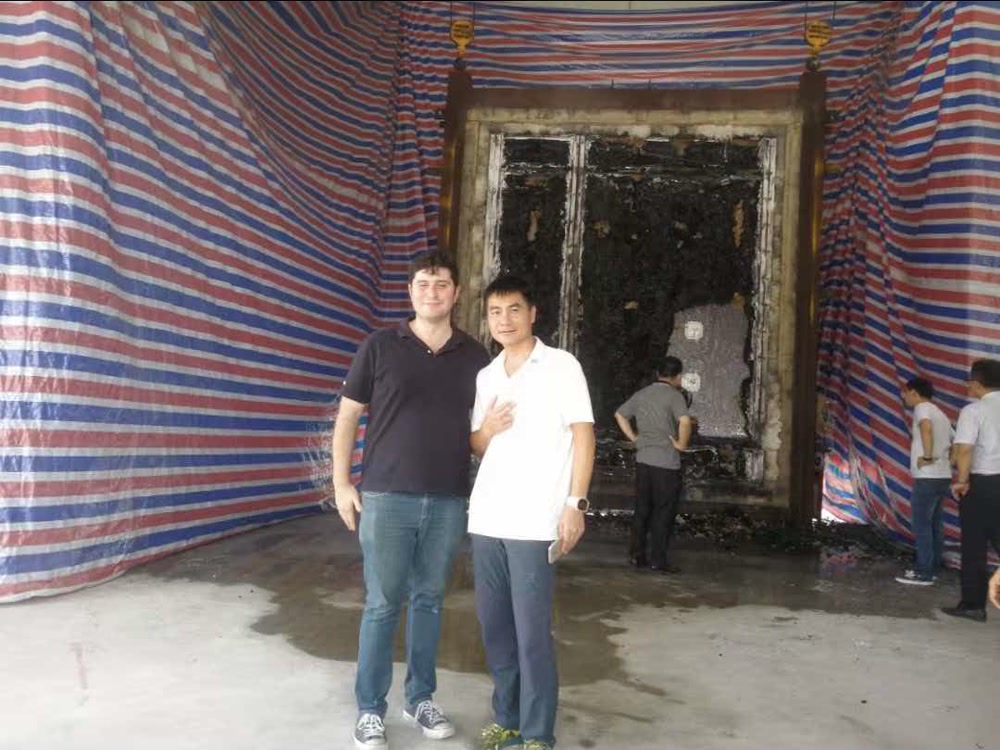
The hose-stream requirement is not identical in every market or test route. Buyers should therefore confirm whether it applies to their project, how it was conducted, and whether the submitted report covers the required system type and rating.
What the Test Evidence Means for a Project
This test programme provides project-specific evidence for the assembly that was evaluated. It should not be read as a universal rating for every glass thickness, frame profile, panel size, sealant, anchor pattern, or curtain wall layout. Changes that appear small in a drawing can alter the fire behaviour of the system.
When reviewing a proposed fire-resistant curtain wall, architects, consultants, contractors, and procurement teams should confirm:
the exact test standard, report number, and testing laboratory;
the fire-resistance duration and the performance criteria covered;
whether the post-fire hose-stream stage is required and documented;
the tested specimen dimensions and permitted maximum glass sizes;
the glass composition, framing system, joints, seals, and perimeter details;
the anchoring method and supporting wall or floor construction;
the permitted orientation, panel arrangement, and field of application;
the installation instructions, labels, and traceability documents required on site.
From Test Assembly to Buildable Glazing System
Successful project delivery requires more than selecting a fire-resistant glass product. The tested construction must be translated into coordinated shop drawings, compatible framing and seals, controlled production, protected packing, and installation details that match the approved evidence. Early review is especially important for large panes, non-standard module sizes, corner conditions, floor interfaces, and connections to adjacent façade systems.
PyroNano supplies fire-resistant glass and glazing systems for architectural applications. For a glass curtain wall enquiry, send the project drawings, required American standard, fire-resistance duration, opening size, glass module dimensions, framing concept, hose-stream requirement, and documentation needs. The PyroNano team can review the specification against the available test evidence and identify the appropriate next step.
Contact PyroNano to discuss a fire-resistant glass curtain wall project.